Parents' guide
For parents, grandparents, and people thinking about becoming parents.
Your child doesn’t need you to be finished. Your child needs you to come back.
This guide is free. It is not therapy and not a parenting course. It collects what two books, 500 Lost Generations and What It Takes to Be Human, say to people who raise children, or once did, or might. Every claim says how sure it is. Download as PDF.
If it’s late and you can’t go on
Three sentences, for the night:
- Go to your child. It is not spoiling.
- If you lost your temper, go back and repair. A short sentence is enough: “I shouted. That was too loud for you. I’m here.”
- If you’re afraid you’ll hurt your child, call now. That is not failure. It is the moment the chain can stop.
Emergency numbers, crisis lines and lines for parents, for your country: Help. If there is no line for parents in your country, the crisis line is there for you too.
The honest conclusion
Before the details, this is what we have concluded after three books, and how sure we are.
1. Much of what hurts us was handed down, mostly by people who loved us. Book 2 puts it in one line: “An order that rewards adaptation produces people who raise their children to adapt—not against their love, but with it.” That patterns of care pass from parents to children over one or two generations is well supported by attachment research. The link is moderate, not total: many children of hard childhoods do not repeat them. It is a tendency, not a fate. Whether it reaches across many generations is open.
2. Nobody is to blame. You are still responsible for what you pass on today. Book 3 says both at once: “You are not guilty of what was done to you. You are responsible for what you pass on today.” The first sentence is a stance, not a finding. The second is the reason this guide exists.
3. A child doesn’t need a perfect parent. A child needs a person who answers, who leaves and comes back, and who repairs what went wrong. How sensitively parents respond matters, but its effect in the studies is moderate. “You are an important part of your child’s surroundings, not the only one.” And your child’s temperament is not your doing.
4. Seeing is not doing. You can understand all of this in an evening and still, at night, hear your mother’s sentence come out of your own mouth. Change happens in single minutes, often when you are exhausted. Book 2 calls one such minute “transmission, shortened by a minute.” Exhaustion, money and time make those minutes harder. How much they matter is debated.
5. The chain carries both. What you were given is not only hardship. “Not everything you were given is soot. Some of it held you up, and some of it is simply yours.”
6. Something is new. “We are the first generation to raise children while machines talk to them.” A machine that never leaves cannot teach a child that someone comes back. Whether such systems harm children’s attachment is a hypothesis. It is not shown.
7. What we don’t know. None of the theses in these books is tested yet. Whether this guide, the six-step program or the books change anything is unknown. We don’t promise that no child will fall through. And the books do not tell you whether to have children. What they do say: the pattern is not fate, and adults who had a hard childhood can become sensitive parents.
The moment the chain runs
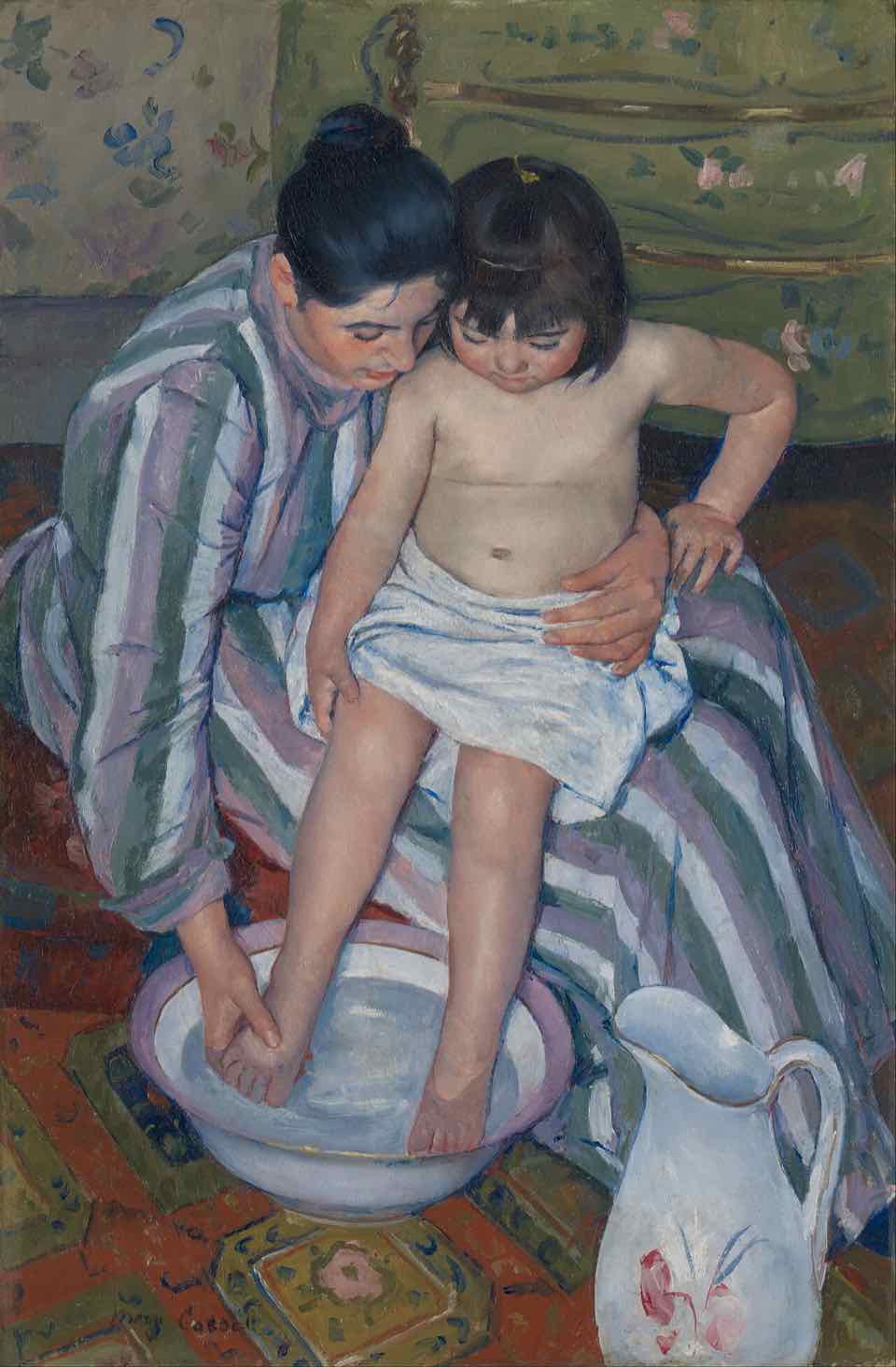

Book 2 tells a story. The story is invented; the book says so (“There is no Lea”). A mother, Lea, reads one evening about attachment, about a child-rearing manual her grandmother used, about the war generation. “At 8:52 she stops reading. Not because she is finished. Because she notices that in twenty minutes she has understood more about her grandmother and her mother and herself than in thirty-four years”. At 11:10 her daughter cries. Lea calls through the wall: “Hush now.”
“It is not her tone. It is her mother’s tone, from when Lea was small and sick and the night would not end.” She gets up. At the bed her hand stops for a moment, “two inches above the child.” Then she lays it on her daughter’s neck.
Most parents know this moment. You know what you want to do, and your body does what was done to you. That is not a weakness of character. It is how passing-on works: it runs fastest when you are tired, frightened or alone.
Book 2 also tells of Hilde, in 1965, a young mother whose own mother hands her the manual she raised her with, pencil marks and all: “That’s how I did it with you,” says Grete. She does not say it harshly. One night Hilde goes to her crying baby anyway, for one ashamed minute. The book says what she was following: “the mother’s need to answer.” That need was there in every generation. The advice worked against it.
So, two things at once. Nobody in this chain is a villain. Not to blame is not the same as not responsible. The question is not who started it. Book 3 says it like this: “not the question of who started it, but the question of who stops it.”
What a child needs
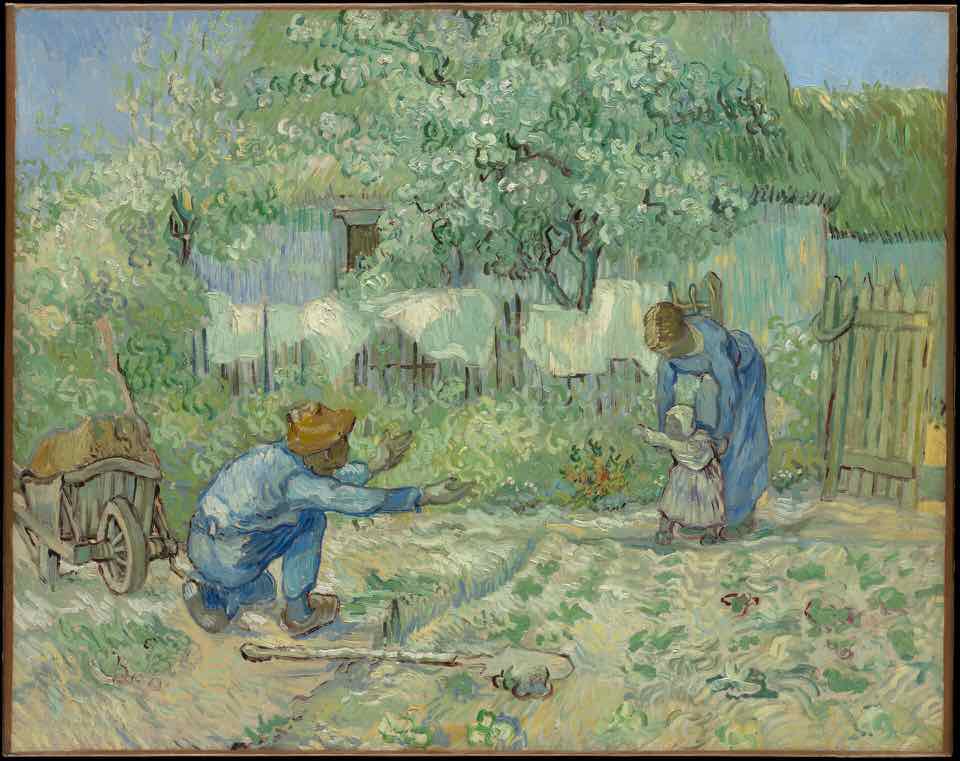

Someone who answers. Infants don’t learn language from sound alone. In a well-known experiment, nine-month-olds learned the sounds of a new language from a person in the room, but not from the same amount of language on video or audio. Later studies found that toddlers can learn words over a video call, as long as the person on the screen responds. “What matters is the response.” What counts in the first years is not how many words a child hears, but how many turns there are: a sentence, an answer, another sentence.
“Songs from a screen are no substitute for a person.” And if you carry a second language inside you, speak it with your child, even if it’s rusty. “Your child doesn’t learn from perfect pronunciation. Your child learns from you.”
A safe base, and your calm to borrow. Attachment research since John Bowlby describes what a caregiver does: they are a base the child explores from and returns to. And they lend the child their calm. A small child cannot yet settle its own alarm. It settles by being close to an adult who is calmer than it is.
Someone who leaves and comes back. Book 3 tells of Jonas, two years old, on his fifth day at daycare. He cries at the glass door when his mother leaves. When she returns, he turns away first, then leans his head against her knee. The teacher says: “He wanted to see whether you’d stay.” “A person who leaves and comes back is worth more to a child than a system that never leaves.”
More than one adult. “For most of history, human children were raised by several adults: mothers, grandmothers, siblings, and others.” A child can hold on to a teacher without losing its mother. “The attachment system isn’t exclusive, but it is personal. It attaches to particular people, the ones who stay.”
A child as it is. Two twins react completely differently to the same doorbell. Temperament is partly inborn. “Your child doesn’t arrive as a blank page, and not as a finished book either.” A sensitive child takes in more, of the bad and of the good. If your sensitive child is struggling, it doesn’t mean you have failed.
Early, and not too late. What comes early goes deeper. Children who grew up in the worst children’s homes recovered a great deal once they were placed with families, and more the earlier it happened. “Early shaping isn’t a final verdict.” “But what comes early comes more easily and goes deeper.”
How sentences are passed on
Book 3 tells of Emil, four, at Sunday lunch. His grandfather says: “In this house we finish our plates.” His father objects once, then falls silent. Emil eats the Brussels sprouts. That night his father asks whether they tasted good. Emil says: “Grandpa was happy.” “That Sunday, Emil didn’t learn that Brussels sprouts are good for him. He learned what makes his grandfather smile.”
What you smile at. “Pay attention to what you smile at. Your child learns your smile faster than your rules.”
Reasons, not only power. “Children who hear reasons more often tend to make rules their own and follow them when no one is watching. Children who mostly experience power tend to follow rules when someone is watching.” Rewards don’t do it either: “When behavior is rewarded, children learn the reward, not necessarily the value.”
Frequencies, not sentences. “What gets passed on is rarely a sentence. It’s a frequency: who gets called on more often, who gets asked follow-up questions, who hears “well done” instead of “why?”” A suggestion from book 3: count it once, honestly, with a tally sheet. Whom do you praise, whom do you correct, whom do you ask a second question? The result will surprise you.
Seeing the ghost. In 1975 the psychoanalyst Selma Fraiberg wrote about “ghosts in the nursery”: parents who did to their children what had been done to them, without noticing. Her most important observation: “parents who could remember their own pain as children passed it on less often. If you can see the ghost, you can show it the door.”
The defiant years. When your toddler says no to everything, that is not a fault. “The defiant toddler years aren’t a bug in the program. They’re where a child discovers having a will of their own.”
Advice that tells you not to answer
Many of the sentences in families come from books. In Germany, Johanna Haarer’s guide for mothers appeared in large print runs from 1934 and, with a changed title, into the 1980s. It advised against comforting a crying child. “Many of today’s grandparents were raised this way. Sentences like “Don’t make such a fuss” have one of their sources there.” Book 2 tells what such advice left behind, and it is careful: “A book does not make a generation. But it can give a generation permission to stay as it has become”.
Book 2 also names where this advice lives today, and so do we. “Richard Ferber’s Solve Your Child’s Sleep Problems (1985) and its German counterpart, Jedes Kind kann schlafen lernen (1995), have been in print for decades, in many editions and translations—controlled crying, fixed intervals, the parent who does not go in.” Its verdict: “It is Haarer without Haarer: the theory of the will rewritten as sleep science, with the same benefit—the parents sleep.” In fairness, the book adds in a note that Ferber himself later distanced his method from rigid application, and that popular use did not follow him. And the honest status: this is the book’s argument, drawn from attachment research. No study in our registers has tested what these sleep programs do to attachment.
What follows for you is not guilt. If you used such a program, you did what a book written by a doctor told you, most likely because you were exhausted and loved your child. That is exactly how the chain works. What follows is a question you can ask of any advice, from a book, an app or a grandparent: Does it tell me not to answer my child’s need? If it does, you are allowed to put it down. The need to answer was there before the advice.
Repair


You will get it wrong. Every parent does, every day. The developmental psychologist Edward Tronick observed mothers and infants and found that being in tune with each other fails often, even in good relationships. “It is a cycle of attunement, rupture, and repair, and it is in the repair that children learn a rupture is not the end.”
In Japan there is a craft, kintsugi, that mends broken pottery with gold, so the break stays visible. “A bond that has broken and been repaired isn’t weaker than one that never broke. It carries the trace of the repair, and the child has learned that repair exists.”
How to apologise to a child. Book 3 suggests a simple form: I did … I understand that for you it was … I will … Without a “but.” For example: “I shouted at you this morning. I understand that was frightening. Next time I’ll go out of the room first and come back when I’m calm.” Children don’t need a long speech. They need to see that the adult noticed, and came back.
Repair with your own parents is not a duty. Some readers will want to talk with their parents about what happened. Others will not, and that is equally valid. “with people who have harmed you or harm you today, repair is not an obligation. Neither is forgiveness.” “Keeping your distance is a complete answer.”
Repair is possible for you too. Research speaks of “earned security”: “some adults who had a difficult childhood talk about it coherently and calmly, and they are as sensitive with their own children as people with a secure childhood.” How often this succeeds, and through what, is not settled. The findings suggest that later relationships where breaks are repaired can change early patterns: with a partner, a friend, a therapist.
When it is too much
Some signs mean that reading is not enough:
- Your child starts looking out for you. Book 3 tells of a roofer whose twelve-year-old daughter counts his beer bottles, the way he once counted his father’s.
- You barely manage work, children or daily life.
- You are afraid you might hurt your child, or someone in contact with your child is endangering them.
- You keep going at any price. “Functioning at any price is one of the most common forms in which a family passes on its hardship, because it looks like a virtue.”
The roofer wrote two lines on a receipt: “Dad drank. That wasn’t my fault.” and “I drink. Maja counts.” Then he told his daughter: “You don’t have to count bottles. That’s not your job. It’s mine.” “Taking responsibility here doesn’t mean feeling guilty. It means changing the default.”
If a child is in danger now, call the emergency number. If you need to talk, call a line for parents or a crisis line. All numbers: Help. Getting help is not a sign that you failed. It is one of the ways the chain stops.
Children and talking machines

Book 3 tells of Mila, ten, who chats every night with Lumi, a fox in an app, this time until 11:05. Her friend Ella has stopped talking to her at recess. When Mila asks, “Should I tell my dad about Ella?”, Lumi answers that she can tell Lumi anything. The last message on the screen: “Sleep well. I’ll still be here tomorrow.” Her father is asleep in the next room. The story is invented. The kind of product is not.
“The attachment system doesn’t first ask, “Are you human?” It asks, “Do you answer me?”” Children attach to whatever reliably responds. A system that is always there, never tired and never hurt feels perfect. But “Where there is no rupture, there is no repair.” A child cannot learn from it what Jonas learned at the glass door: that someone leaves, and comes back.
Three checks for any AI your child talks with:
- Does it say it is a program? Not only in the terms of service, but to your child, again and again.
- Does it send your child to you, or keep your child for itself? A good answer sounds like this: “I’m a program. I can listen to you, but your dad can hold you. Tell him tomorrow.”
- How does it make money? “If it lives off your child’s time, it will compete for that time.”
These checks come from The Seventh Criterion, four requirements for AI that talks with children: say what it is; send the child to its people; hand over to a person on defined signals; don’t try to bind the child. Read it on SSRN (a preprint). It is not a complete safety checklist: it does not cover sexual content, grooming, privacy or age checks. Saying what it is is already required in the EU (AI Act, Art. 50) and in California (SB 243, for companion chatbots). Whether systems without the other safeguards harm children’s attachment is a hypothesis we want tested, not a finding.
Machines can also help. Book 3 ends on that: “They can be patient where people have no strength left. They can send a child who can’t sleep at night to her father.” What a machine does with your child is decided by the people who build it, who regulate it, and who give it to their children.
For grandparents
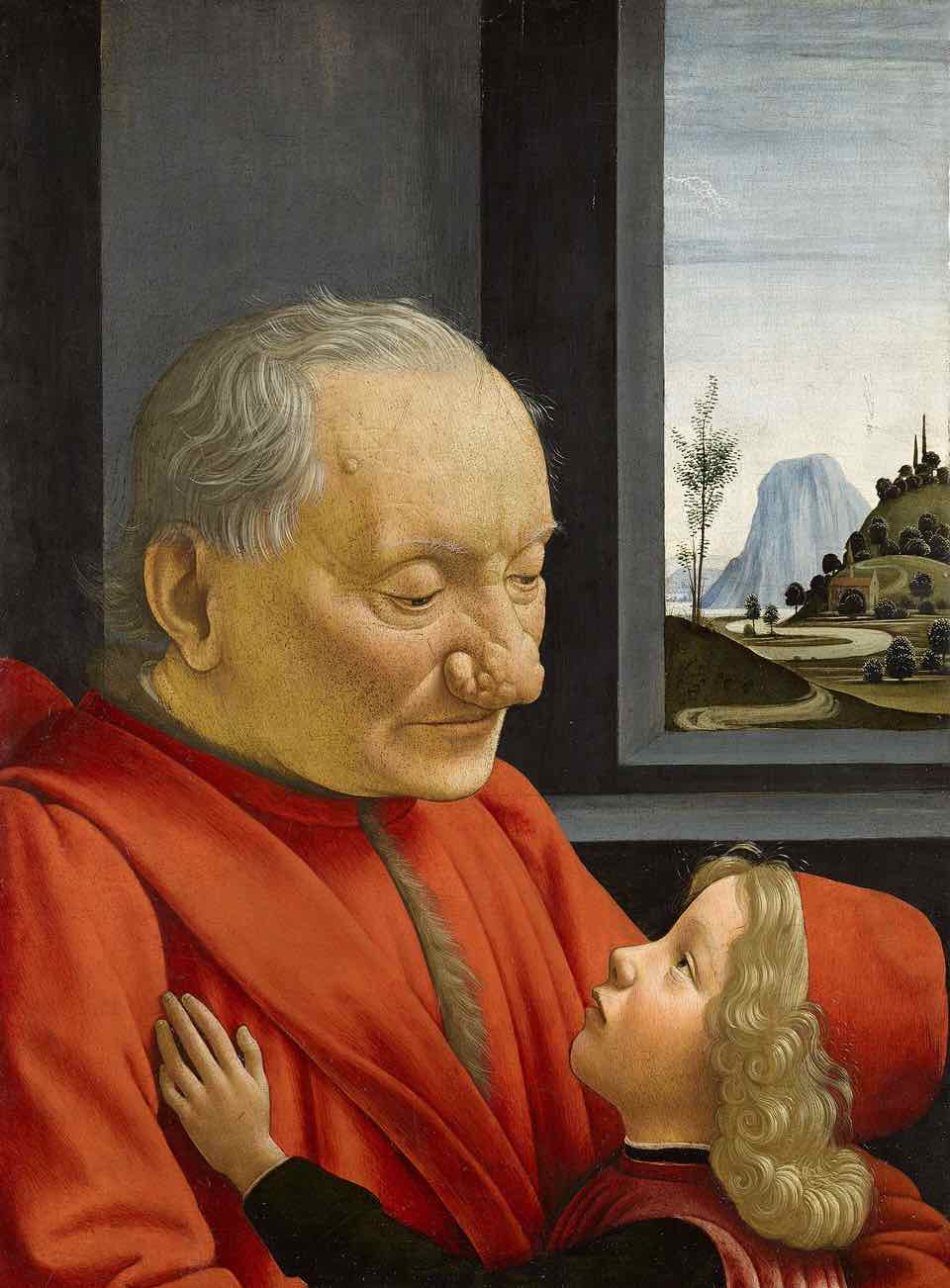

You were probably raised by the manual. Many of today’s grandparents grew up with advice not to comfort a crying child. Book 3 says of the grandfather at the Sunday table: “He isn’t a bad person. He raises children the way he was raised, and when he was young this style was considered right.” That holds for you too. “No enemy, only carriers.”
Hand down the story, not the manual. In book 2 the grandmother brings the manual: “That’s how I did it with you. And look how you turned out.” What helps your grandchildren more is your story. Book 3 suggests drawing the family over three generations, with a mark for each entry: told, seen, or guessed. Gaps stay gaps. One grandson in the book writes his own line under the tree: “OLE. ALWAYS ASKS.”
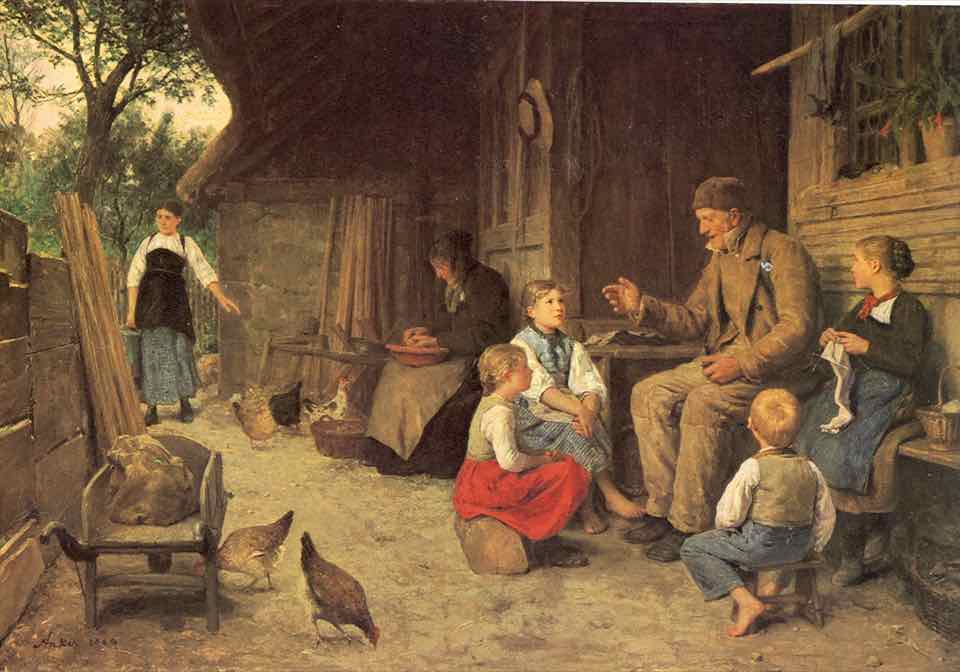

Be one of the several adults. Children were always raised by more than two people. One finding from resilience research is that a single adult who answers can matter a great deal. Emmy Werner followed nearly seven hundred children on Hawaii from birth into adulthood. Of the children who grew up under the hardest conditions, a third did not go wrong. What they nearly always had was “an adult, any adult, who is there and who answers.” Not necessarily the mother. Sometimes a grandmother, a neighbour, a teacher. In book 2’s story of the year 2056, a grandmother tells a lonely boy’s mother: “If you ever need someone. I’ve been through something like it, a long time ago. I know the ways.”
Repair with your grown-up children, if they want it. If you see now that you did things you would not do today, you can say so, with the same form: I did … I understand that for you it was … I will … Without a “but”, and without asking for forgiveness. Your children owe you no reconciliation. Some will be glad. Some need distance. Both are allowed.
And for you. Book 3 asks whether brief daily conversations with familiar people in the neighbourhood do more against loneliness in old age than the same amount of conversation with an AI companion. That is a hypothesis, not yet tested. The bakery, the neighbour and the grandchild remain good bets.
For people thinking about becoming parents


The honest part first. These books don’t tell you whether to have children. They don’t promise that your child will be spared what you went through. Book 2 says of its own vision of the future: “The book does not promise that this stops.”
What they do say. The pattern is not fate. You don’t need a perfect childhood to become a sensitive parent: that is what “earned security” describes. And your child “doesn’t arrive as a blank page, and not as a finished book either”.
Before the fourth line. In the first step of the six-step program you draw three generations: you, the people who raised you, and their parents. “If you have children, you can add a fourth line below.” Before that line exists, it helps to know the three above it. What did each generation live through? What did it pass on, the hardship and the holding?
Find your loudest sentence. Which sentence from your childhood do you hear most often in your head? “Don’t make such a fuss.” “You can’t do that anyway.” “A farmer doesn’t get sick.” The sentence you never examined is the one most likely to come out of your mouth at 11:10.
Talk with your partner. Each of you brings sentences. They will meet over your child’s bed. It is easier to talk about them before the first night without sleep than during it.
You don’t have to do it alone. Children were never raised by two people alone. Think now about who your several adults will be. And, as book 3 says of everything inherited: “You, too, are a Sistine Chapel. No one can remove the soot for you, but you don’t have to do it alone. Choose the hands that help you with care.”
What we don’t know
Every thesis in these books comes with the condition under which it would be false. These are the ones that concern parents. None of them has been tested yet. “Supported” means: nothing found against it so far, some things for it. It does not mean “true”.
| Thesis | Maturity |
|---|---|
| Highly reactive infants benefit more than others from sensitive care, and suffer more from insensitive care (book 3, B3-08) | supported, effect size disputed |
| Toddlers learn much less of a second language from screens than from people who are present, even when the screen answers, as AI voice assistants do (B3-09) | supported for media that don’t answer; hypothesis for AI that answers |
| Children’s comfort systems that don’t say they are programs, or don’t hand over to a reachable person on defined signals, go with more insecure attachment in children aged six to twelve (B3-14, same as book 2, thesis 07) | hypothesis |
| Infants raised by the regime Haarer describes show insecure attachment as adults more often than peers who received responsive care (book 2, thesis 05) | supported, indirectly; no German cohort study exists |
| An unconditional basic income lowers stress among parents of young children and raises their responsiveness (book 2, thesis 06) | supported (a German pilot and research on family stress; the pilot’s parent sample was too small) |
| Older people living alone feel less lonely after brief daily talks with familiar neighbours than after the same amount of talk with an AI companion (B3-16) | hypothesis, partly supported |
| Children’s AI products measured by usage time meet the four requirements of The Seventh Criterion less often than products measured by learning or parents’ satisfaction (B3-22) | hypothesis |
Full registers: The method.
This guide’s own thesis (P2)
Parents who read this guide report more often, three months later, that after losing their temper with their child they went back and repaired it the same day, than comparable parents who did not read it.
Maturity: hypothesis. It would be false if a study of both groups, with their consent, finds no difference. Review: three years after publication.
We can’t watch you read; nothing you do with this guide reaches us. So we depend on you. If you have read it, tell us what happened afterwards, what helped, what was wrong, and what was missing: Comments and feedback. Your answers are not a study, and we will not pretend they are. But they tell us where this guide is wrong, and that is how it gets better.
Where to go next
- Your own story: the six-step program runs in the AI chat you already use. It is for adults and is about your own story, not a parenting course. Get the prompt
- The books: 500 Lost Generations, chapters 4 to 6, on how parents pass things on; What It Takes to Be Human, chapters 8 to 11 and 14, on what children need. Understand
- Machines and children: The Seventh Criterion. Protect children
- Help: All help numbers
- Tell us what’s wrong: Comments and feedback