Nobody is to blame. Everyone passes on what they received.
Know thyself.
Inscription at the Temple of Apollo at Delphi
Every thesis in these books comes with the condition under which it would be false.
The chain

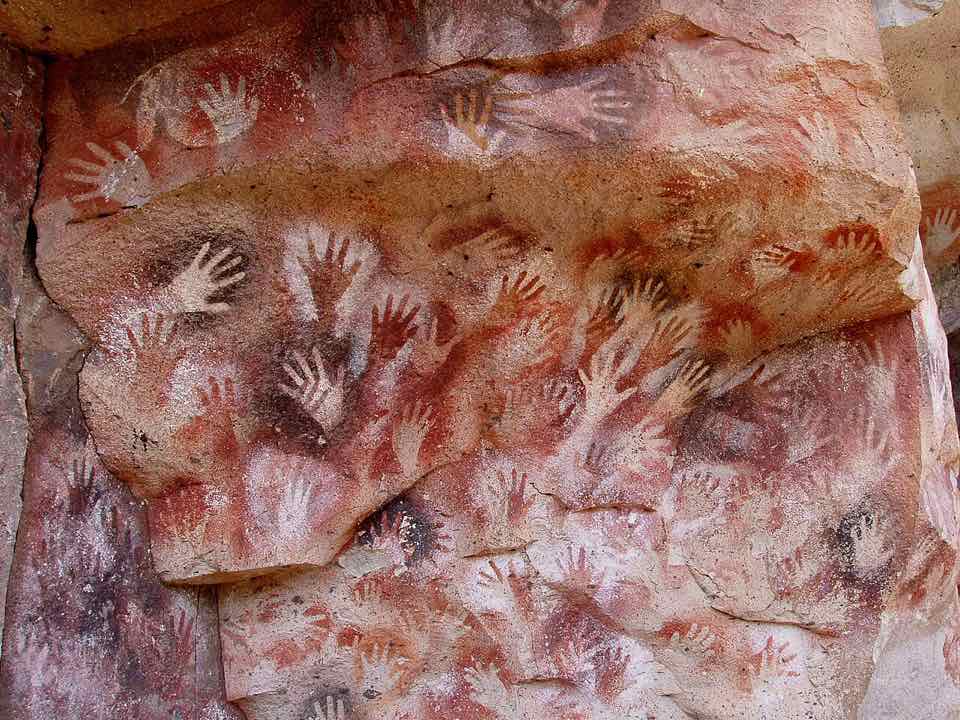
Cueva de las Manos, Santa Cruz, Argentina. Photo: Mariano, public domain · Wikimedia Commons Parents pass on what they received: the pain, and the ways of surviving it. In sentences and in patterns, often without knowing. Book 2 puts it in one line:
“An order that rewards adaptation produces people who raise their children to adapt—not against their love, but with it.”
That is not leniency. Not to blame is not the same as not responsible.
The gap

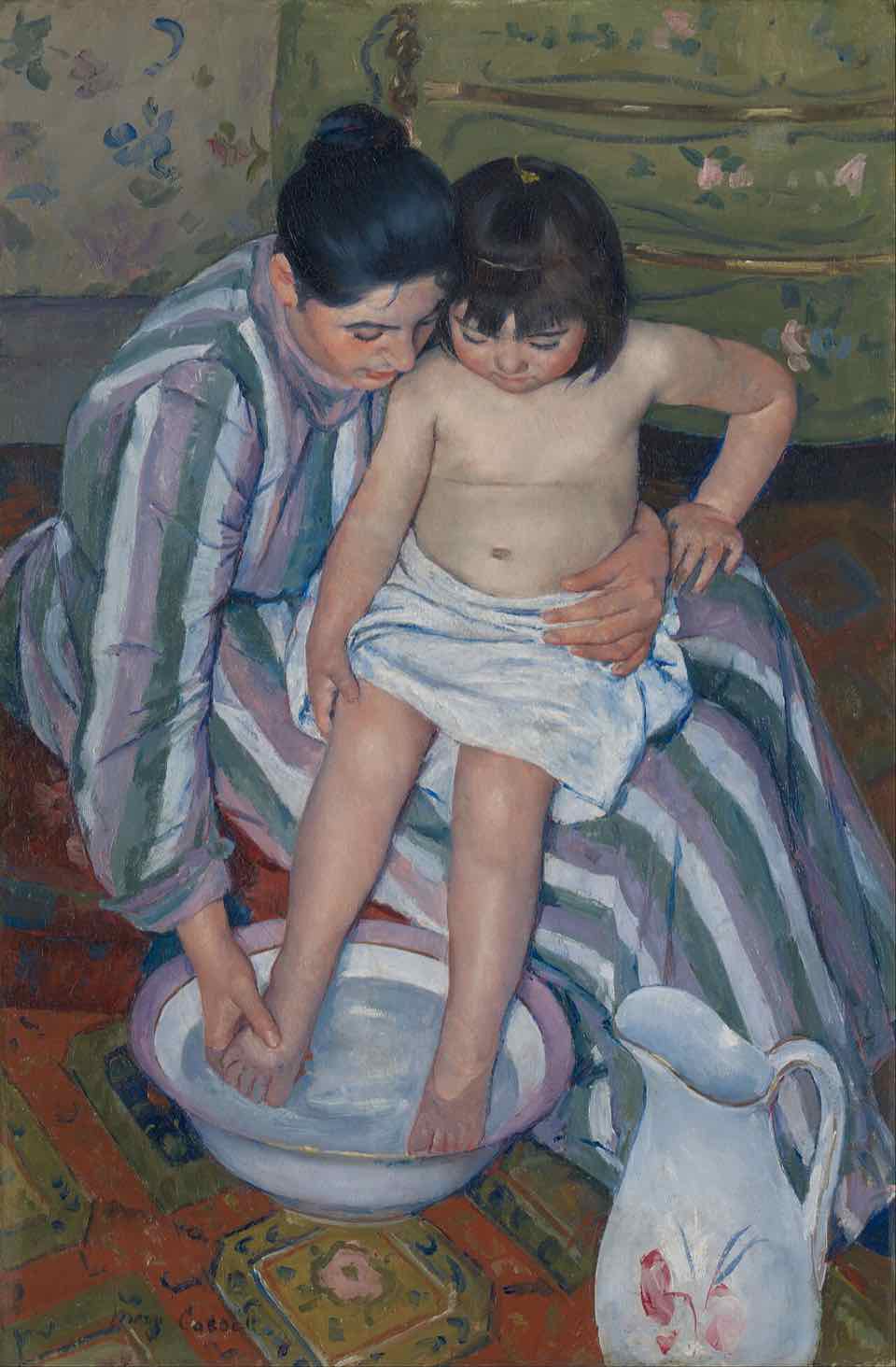
Mary Cassatt, The Child's Bath, 1893. Public domain (Google Art Project) · Wikimedia Commons In book 2, a woman reads one evening how it works. At 8:52 she has understood more about her grandmother, her mother and herself than in thirty-four years. At 11:10 her daughter cries, and she hears herself call through the wall: “Hush now.” It is her mother's tone, and beneath it her grandmother's. Seeing is not the same as doing. Book 2 calls this gap the most important part of the book.
500 generations

Pieter Bruegel the Elder, The Tower of Babel, 1563. Public domain (Google Art Project) · Wikimedia Commons Book 2 tells the chain in seven stories, from about 9500 BCE to 2056: 500 generations, and then two more. After each story comes “What Actually Happened Here”, which says what was invented. The settling story is not new. It goes back to Rousseau; Jared Diamond called agriculture “the worst mistake in the history of the human race” (1987); David Graeber and David Wengrow argue there was no single break (2021). Book 2 names them itself. It doesn't claim a golden past, a way back, or an enemy.
Don't trust me. Test me.

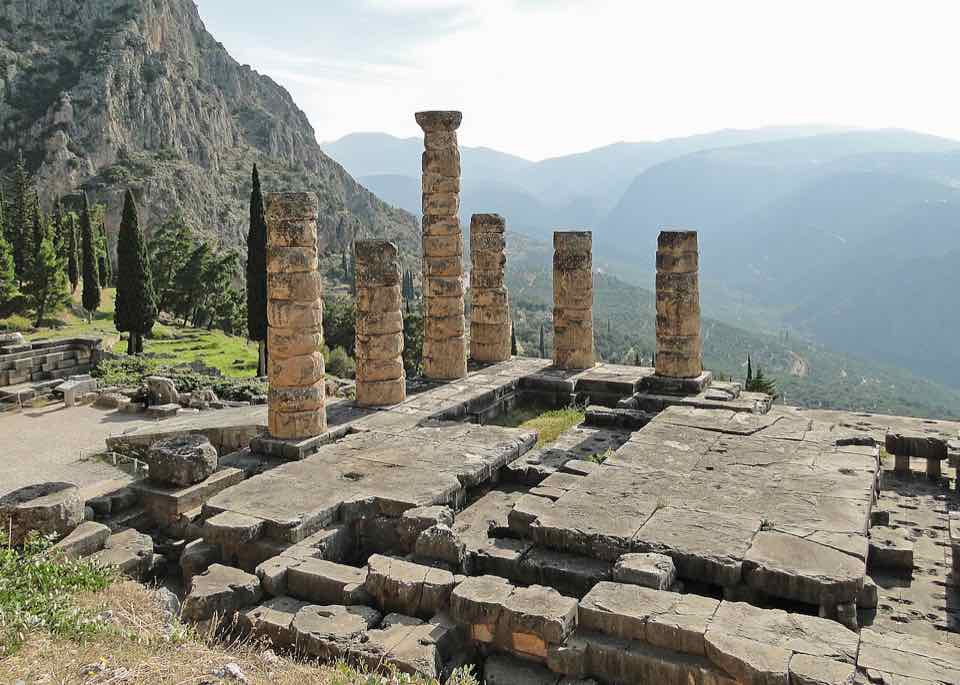
Temple of Apollo, Delphi. Photo: Bernard Gagnon, CC BY-SA 4.0, resized · Wikimedia Commons Know thyself was a quest for 2,500 years. These books try to make part of it testable. Every chapter ends with a thesis that could be proven wrong. The register lists them all, each with its maturity, the condition under which it would be false, and a review date. At first printing none of them is tested.
“… I would rather learn that they are false than repeat them untested in the next edition.”
Each book also names the most important claim it could not make testable, and keeps it anyway.
The machine as mirror

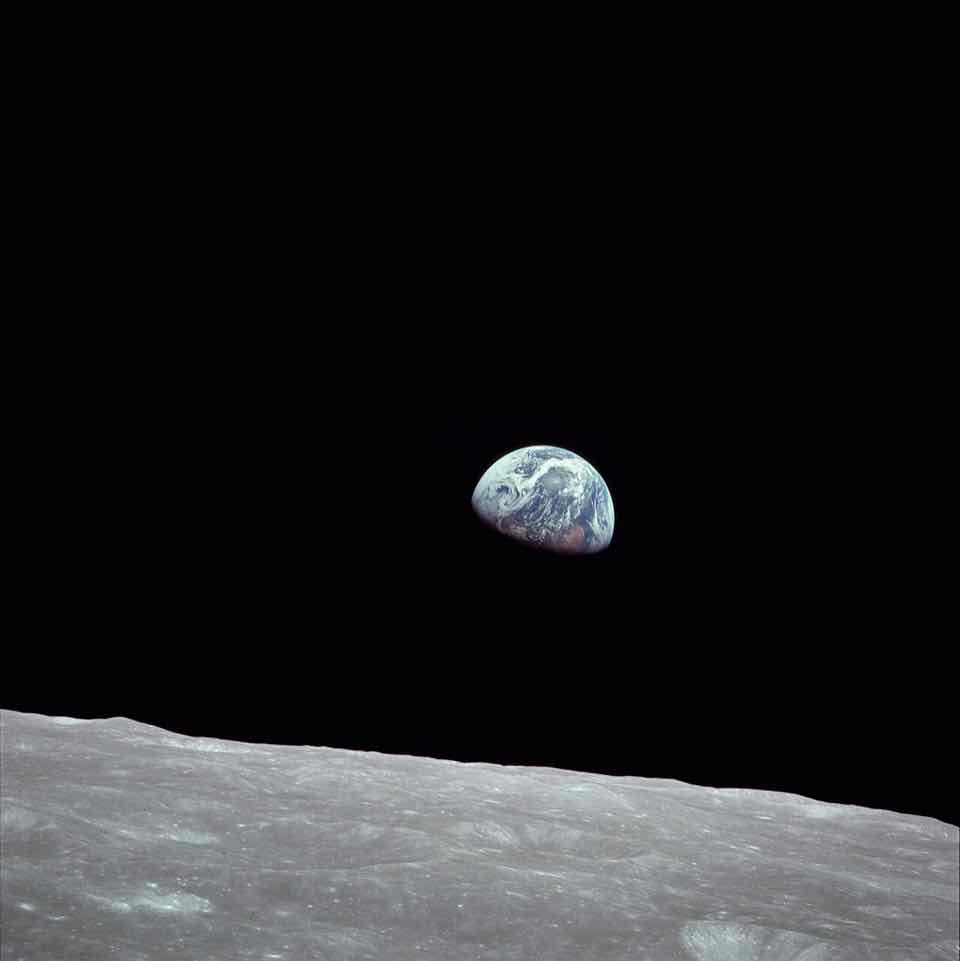
Earthrise, Apollo 8, 24 December 1968. Photo: NASA/Bill Anders, public domain · Wikimedia Commons Book 3 holds a machine up to us and asks what it doesn't need: “a body that gets tired, a person who leaves and comes back, a face that can be lost, a time that ends.” That is where you see what a human being does need. Every chapter has a section called “Where It Breaks”, and the book never draws conclusions about people from machines. Brian Christian asked a related question in The Most Human Human (2011); book 3 asks about need, not ability. One of its theses: people and language models explain their own behaviour by borrowing common theories, not by reporting what actually happened (B3-13, a hypothesis).
The Sistine Chapel

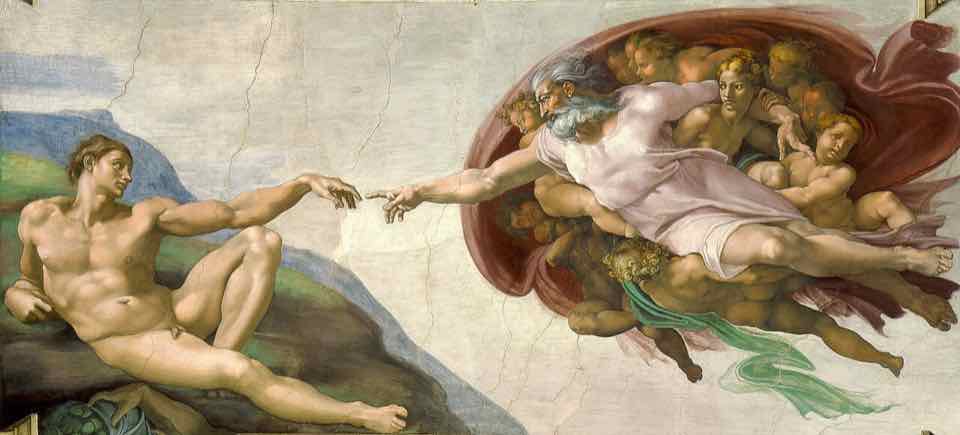
Michelangelo, The Creation of Adam, Sistine Chapel ceiling (detail). Public domain · Wikimedia Commons In 1980, restorers began cleaning the ceiling of the Sistine Chapel. Under centuries of candle soot, bright colours appeared. No one had darkened the ceiling on purpose; everyone had taken the soot for the work itself. The restoration was disputed too. Some felt too much had been removed in places. That caution belongs here as well.
You, too, are a Sistine Chapel. No one can remove the soot for you, but you don't have to do it alone.
Three ways
Begin
There is no central server. The update has to run on every human, one at a time: six steps through your own story, in the AI app you already use. For adults; a program, not therapy. Review edition: ongoing tests, feedback welcome.
Understand
Three books: what it takes to be human, where it comes from, and where it started.
Protect children
The Seventh Criterion: four requirements for AI that talks with children, testable from outside. A guide for parents is in preparation.