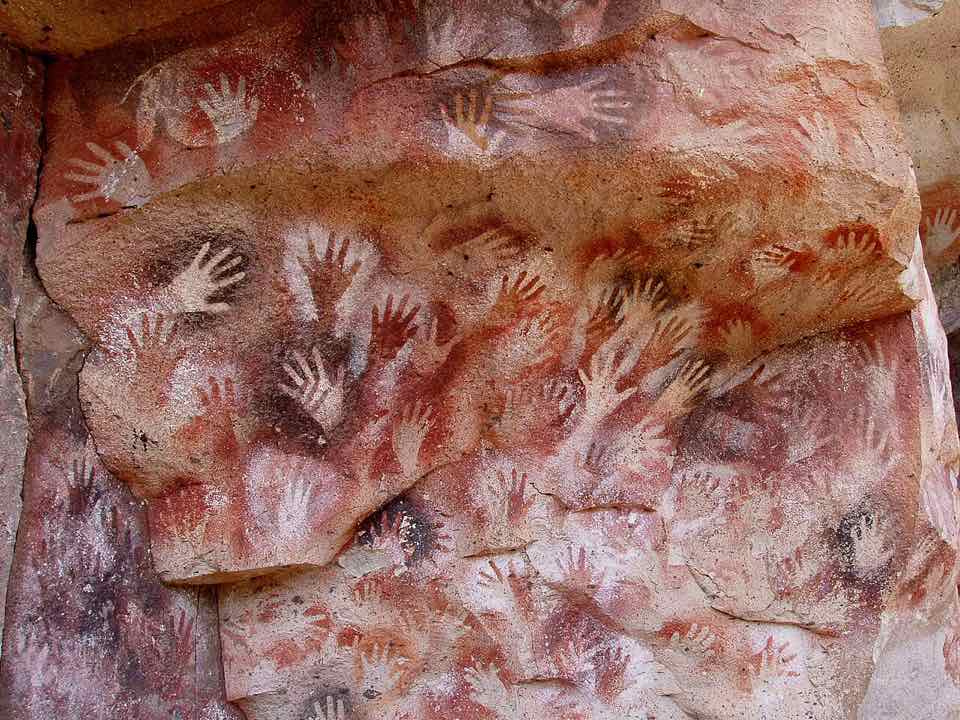
Cueva de las Manos, Santa Cruz, Argentina. Photo: Mariano, public domain · Wikimedia Commons
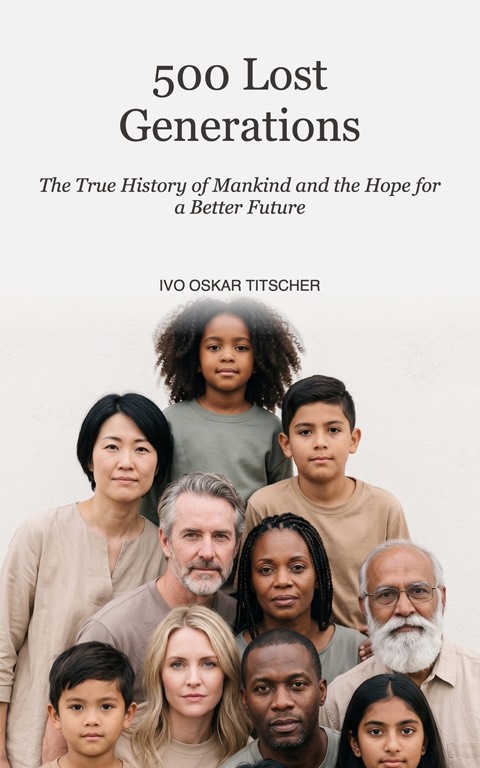
Parents pass on what they received: the pain, and the ways of surviving it. Much of it sits in sentences: “Don't make such a fuss.” “You can't do that.” Many of these sentences aren't true. They get passed on anyway, often without anyone noticing. 500 Lost Generations puts it in one line:
“An order that rewards adaptation produces people who raise their children to adapt—not against their love, but with it.”
That is not leniency. Not to blame is not the same as not responsible.
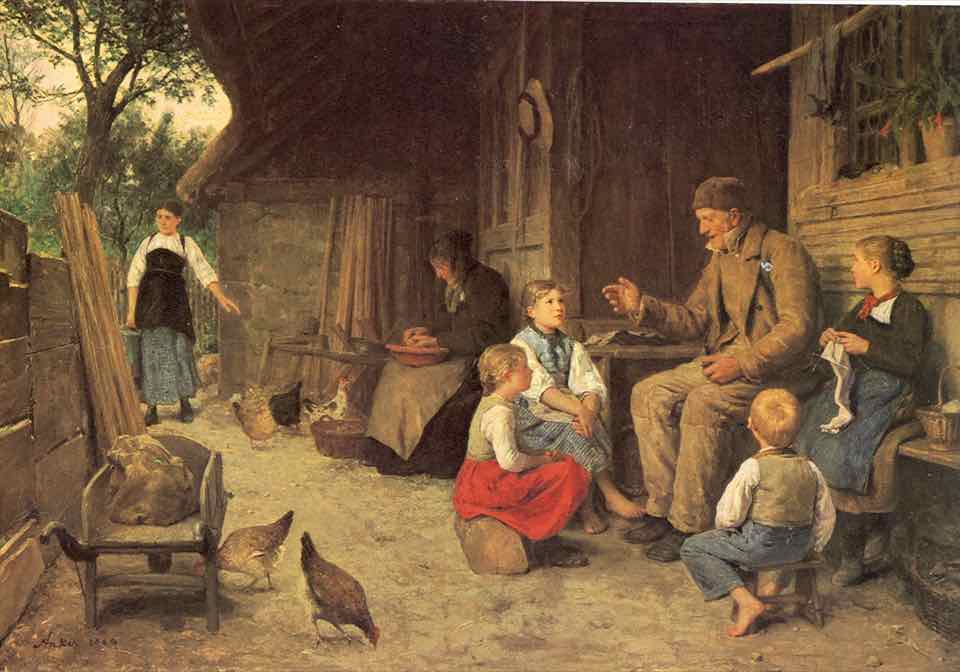
Albert Anker, Grandfather Tells a Story, 1884. Public domain · Wikimedia Commons
A child learns what the world is like and what it is worth long before it can question it: in sentences and patterns, first through its attachment to the people who raise it.
Our operating system evolved over 300,000 years for a life in small groups on the move. About 12,000 years ago we settled. We changed our own conditions without knowing what that would do to us.
Many people today carry insecurity in relationships, lifelong fears or the feeling of being worthless. The thesis of these books, and it can be tested: much of it is passed on, for 500 generations, often without anyone noticing.
The brain stays malleable throughout life. The OS isn't faulty, so the update doesn't repair it. It adapts it to a world it wasn't built for.
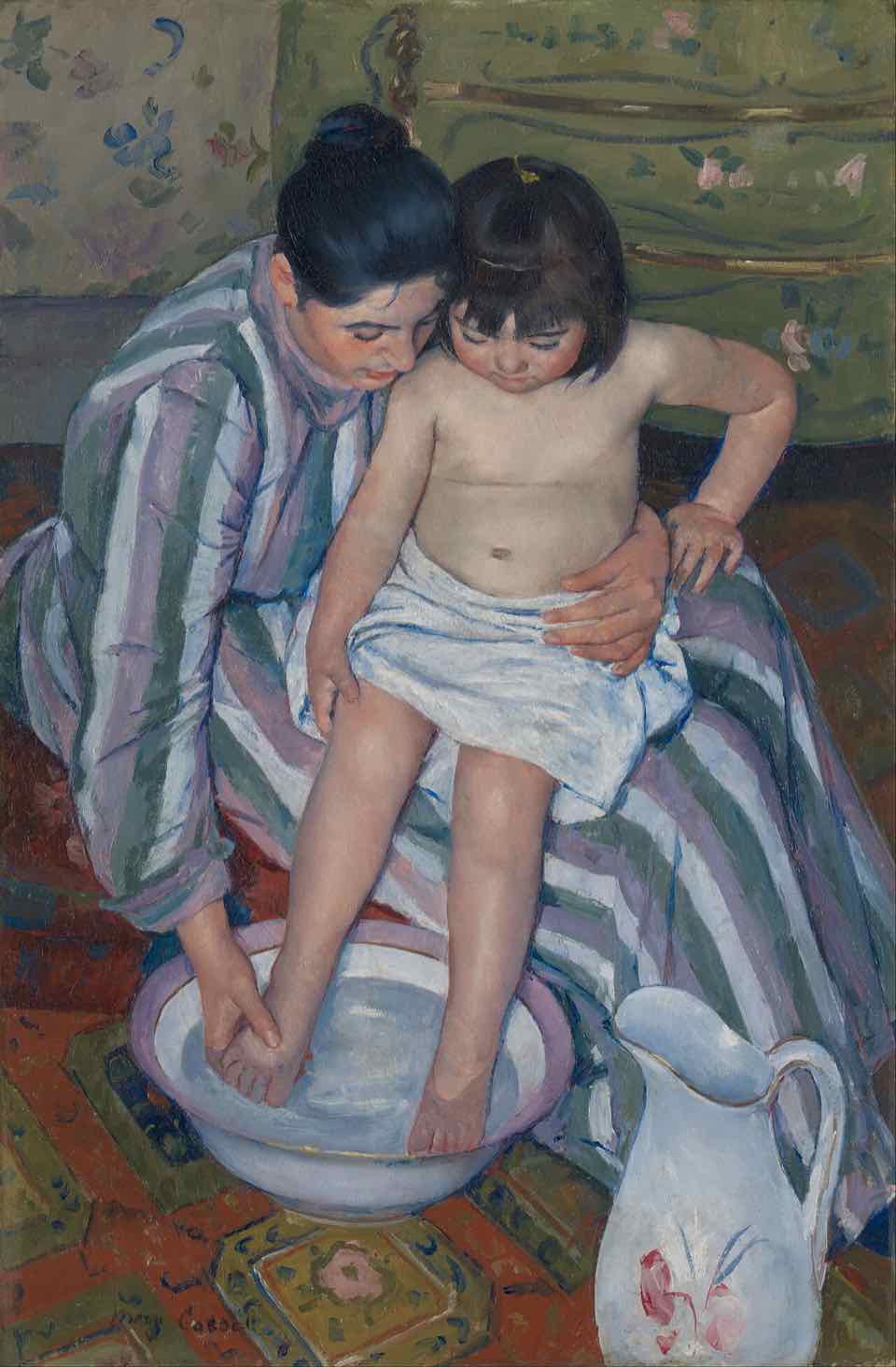
Mary Cassatt, The Child's Bath, 1893. Public domain (Google Art Project) · Wikimedia Commons
At some point you notice that a sentence isn't true. And you still act on it.
In 500 Lost Generations, a woman reads one evening how it works. At 8:52 she has understood more about her grandmother, her mother and herself than in thirty-four years. At 11:10 her daughter cries, and she hears herself call through the wall: “Hush now.” It is her mother's tone, and beneath it her grandmother's. Seeing is not the same as doing. The book calls this gap its most important part.
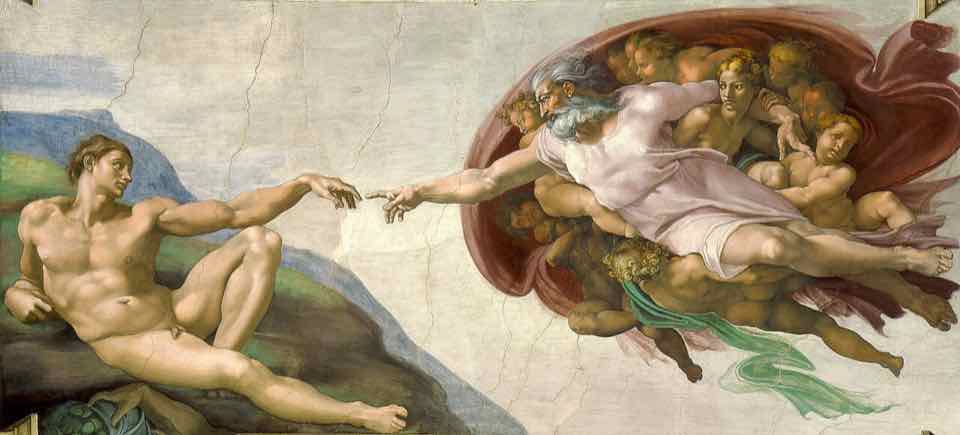
Michelangelo, The Creation of Adam, Sistine Chapel ceiling (detail). Public domain · Wikimedia Commons
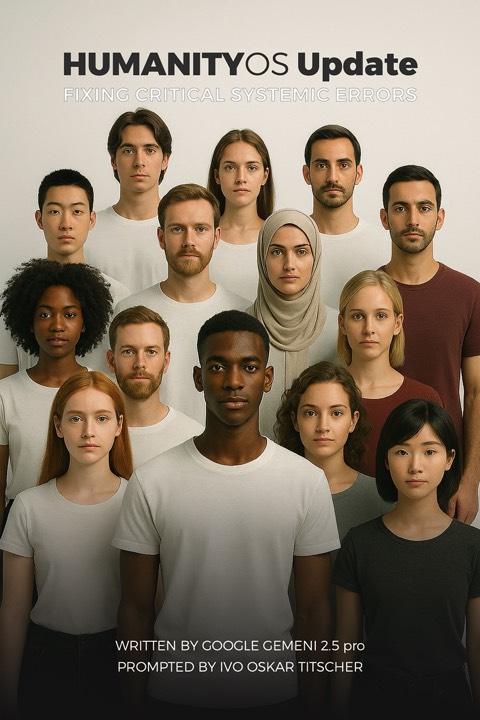
This is where the update starts. In six steps you find the sentences you were given, test each one and decide which ones you pass on, one step per session, in the AI chat you already use. It doesn't make the change for you. It sets it in motion.
In 1980, restorers began cleaning the ceiling of the Sistine Chapel. Under centuries of candle soot, bright colours appeared. No one had darkened the ceiling on purpose; everyone had taken the soot for the work itself. The restoration was disputed too. Some felt too much had been removed in places. That caution belongs here as well.
You, too, are a Sistine Chapel. No one can remove the soot for you, but you don't have to do it alone.
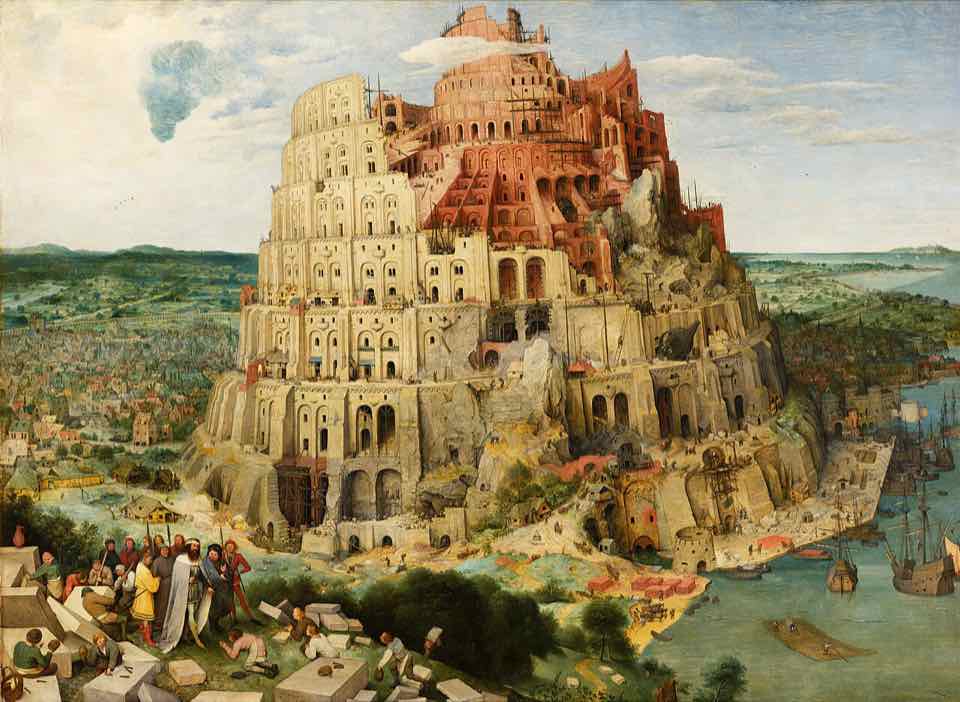
Pieter Bruegel the Elder, The Tower of Babel, 1563. Public domain (Google Art Project) · Wikimedia Commons
500 Lost Generations tells the chain in seven stories, from about 9500 BCE to 2056: 500 generations, and then two more. After each story comes “What Actually Happened Here”, which says what was invented. The settling story is not new. It goes back to Rousseau; Jared Diamond called agriculture “the worst mistake in the history of the human race” (1987); David Graeber and David Wengrow argue there was no single break (2021). The book names them itself. It doesn't claim a golden past, a way back, or an enemy.
Know thyself was a quest for 2,500 years. These books try to make part of it testable. Every chapter ends with a thesis that could be proven wrong. The register lists them all, each with its maturity, the condition under which it would be false, and a review date. At first printing none of them is tested.
“… I would rather learn that they are false than repeat them untested in the next edition.”
Each book also names the most important claim it could not make testable, and keeps it anyway.
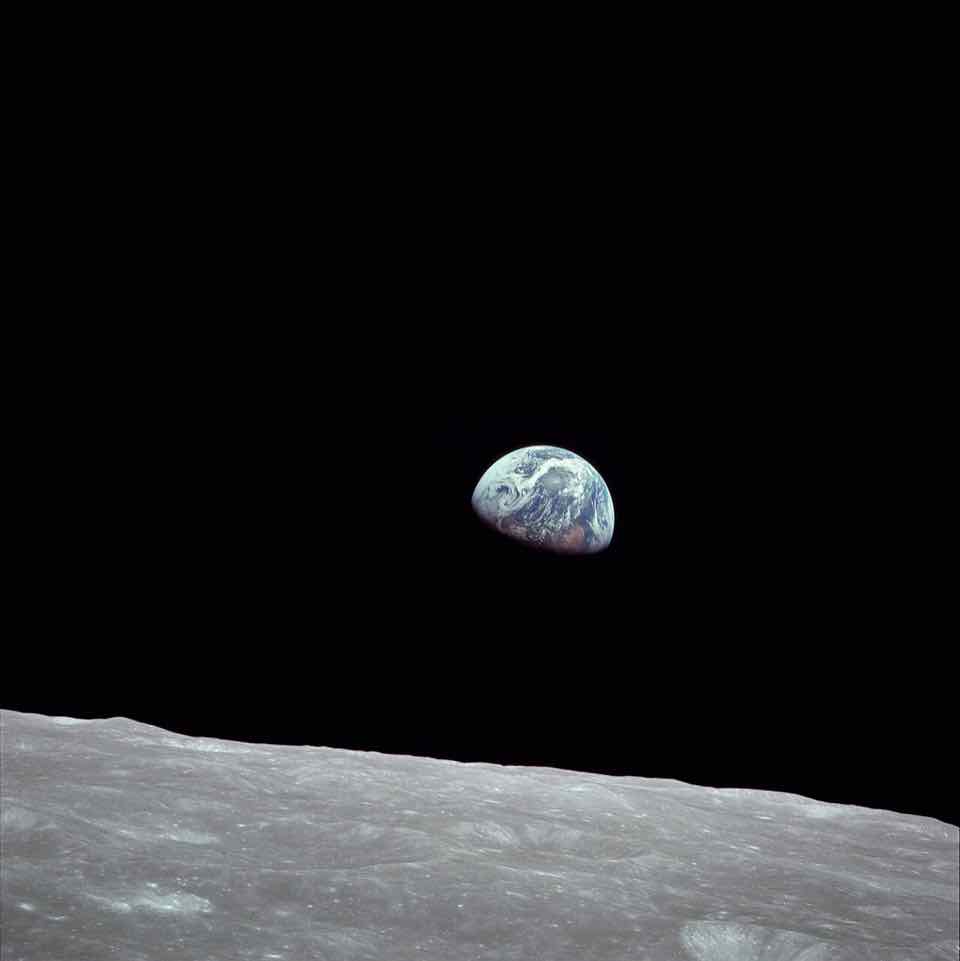
Earthrise, Apollo 8, 24 December 1968. Photo: NASA/Bill Anders, public domain · Wikimedia Commons
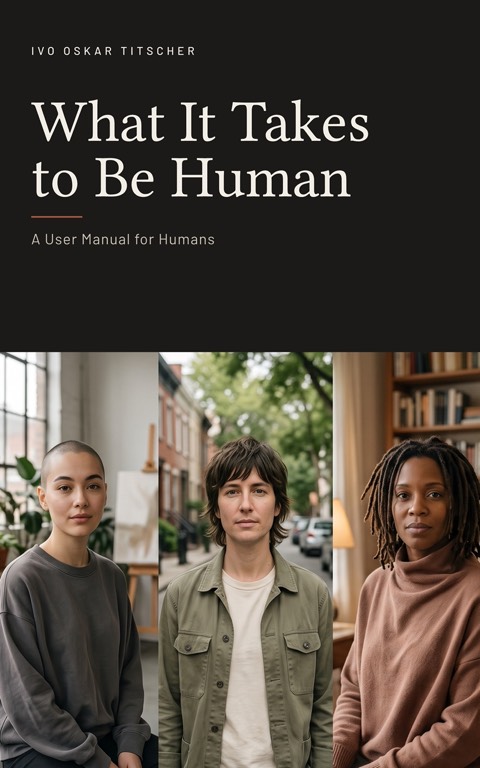
What It Takes to Be Human holds a machine up to us and asks what it doesn't need: “a body that gets tired, a person who leaves and comes back, a face that can be lost, a time that ends.” That is where you see what a human being does need. Every chapter has a section called “Where It Breaks”, and the book never draws conclusions about people from machines. Brian Christian asked a related question in The Most Human Human (2011); the book asks about need, not ability. One of its theses: people and language models explain their own behaviour by borrowing common theories, not by reporting what actually happened (B3-13, a hypothesis).